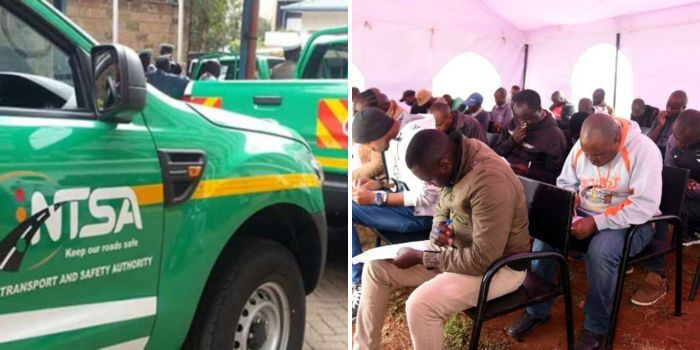
In a decisive shift toward data-driven road safety, the National Transport and Safety Authority (NTSA) has unveiled sweeping reforms that place the driver—both their health and behaviour—at the centre of Kenya’s fight against road carnage.
The new measures, announced in a March 31 notice, will see all motorists—particularly those operating commercial and Public Service Vehicles (PSVs)—subjected to mandatory, regular medical assessments. The initiative, coupled with the rollout of real-time digital monitoring systems, signals a fundamental rethink of how road safety is enforced along the country’s busiest corridors, including Nairobi–Mombasa and Nairobi–Kisumu–Malaba highways.
At the core of the reforms is a simple but often overlooked truth: a driver’s physical and mental condition can be as critical as the vehicle they operate. The planned medical checks will screen for conditions known to impair driving ability—ranging from vision and hearing deficiencies to fatigue-related disorders and chronic illnesses such as diabetes.
NTSA Director General Nashon Kondiwa underscored the urgency of the intervention, noting that rest and recovery are integral to road safety. To that end, the Authority will establish designated rest stations along major transport corridors, offering long-distance drivers structured opportunities to pause, recover, and regain alertness.
HYPERMAX MOTORS
Affordable Rides, unbeatable Price
“Resting stations are the physical embodiment of the Safe System philosophy,” Kondiwa said, “protecting drivers at their most vulnerable.”
The reforms are anchored in the globally recognised Safe System Approach—a model embraced by institutions such as the World Bank and the International Transport Forum. The approach acknowledges that human error is inevitable and instead focuses on designing systems that anticipate mistakes and minimise their consequences.
Technology will play a central role in this transformation. NTSA plans to deploy advanced digital monitoring tools—including telematics, dashboard cameras, and GPS tracking—to observe driver behaviour in real time. These systems will track speed, braking patterns, alertness, and compliance with traffic rules, transmitting data to centralised monitoring platforms.
Smart People Read Great Books
We have great e-books for smart brains. Buy with Mpesa/Airtelmoney or Card and Get a copy in your email INSTANTLY!
Under the proposed framework, vehicles will be required to install approved digital devices capable of flagging risky driving patterns before they escalate into accidents. The data collected will also feed into integrated driver profiles, enhancing enforcement, accountability, and long-term behavioural tracking.
The Authority is currently working alongside the Directorate of Occupational Safety and Health Services (DOSH) to finalise a National Framework for driver medical assessments, as stipulated under the Traffic Act.
The urgency of these reforms is underscored by sobering statistics. According to NTSA, fatigue, underlying health conditions, and reckless driving remain among the leading causes of road accidents in Kenya. Commercial vehicles, in particular, are emerging as a growing concern, accounting for a significant share of reported incidents.
Ultimately, the initiative represents more than regulatory tightening—it is a strategic pivot toward prevention. By combining human health oversight with intelligent surveillance, NTSA is betting on a future where accidents are not merely responded to, but anticipated and averted.