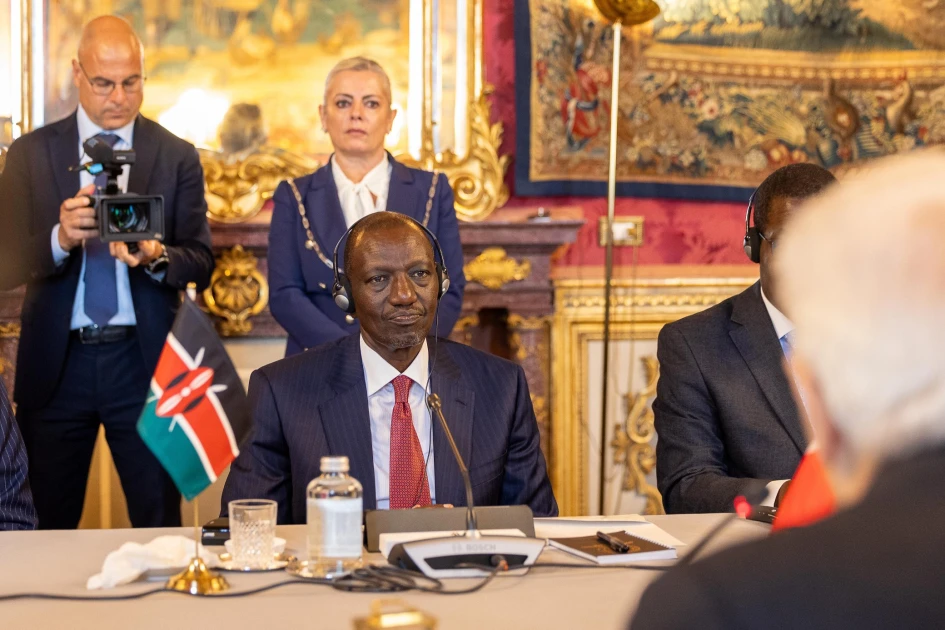
ROME – In a sharp break from Cold War-style allegiance politics, President William Ruto has declared that Kenya will neither kneel to Washington nor bow to Beijing. Instead, Nairobi is charting a third path: straight ahead.
Addressing a packed public lecture at the LUISS School of Government in Rome on Tuesday, Ruto unveiled a foreign policy doctrine built on strategic pragmatism – one that seeks partnerships not patrons, and progress over posturing.
“Kenya is building strong, forward-looking partnerships and alliances that expand opportunity and drive shared progress,” Ruto said. “We recognise that our future will not be shaped in isolation, but through purposeful cooperation with those equally committed to growth, stability, and innovation.”
Then came the line that reset the diplomatic conversation.
“That is why we neither look to the West nor the East – we look forward.”
The audience of policymakers, academics, and diplomats responded with sustained applause. For a nation long courted by both superpowers, the message was unmistakable: Kenya will not be a pawn on anyone’s geopolitical chessboard.
A Delicate Balancing Act
Ruto’s clarity arrives after months of diplomatic turbulence. In recent visits to Beijing, the president had spoken of collaborating with China to “build a new world order” – language that raised eyebrows in Washington. US officials, privately irked, began questioning Kenya’s long-term reliability.
The resulting whiplash forced Kenya into an uncomfortable spotlight: was it drifting toward the Eastern bloc, or was it still America’s traditional ally?
Tuesday’s speech in Rome was Ruto’s unequivocal answer – neither.
By rejecting binary choices, the president positions Kenya as a sovereign actor that evaluates deals on their own merit, whether they involve Chinese infrastructure loans, American trade preferences, or European green investment.
Beyond Diplomacy: Listening at Home
Ruto also used the Rome platform to pivot from foreign affairs to domestic governance, underscoring that credible leadership abroad begins with responsive leadership at home.
“My administration remains focused on responsive governance – listening to citizens and acting decisively to address any emerging challenges,” he said.
The remark carried weight. Kenya has faced cost-of-living pressures, debt management hurdles, and climate shocks. Ruto’s message was that foreign alliances must ultimately translate into jobs, stability, and opportunity for ordinary Kenyans – not just geopolitical talking points.
A Blueprint for the ‘Global South’?
Analysts see Ruto’s “look forward” doctrine as potentially influential beyond Kenya. Many middle-power nations in Africa, Asia, and Latin America are weary of great-power rivalry that forces them to choose sides.
“Ruto is offering a template – engage everyone, align with no one, and always prioritise national interest,” said a foreign policy expert who attended the lecture. “It’s not isolationism. It’s strategic independence.”
Whether that balancing act holds under pressure remains to be seen. But for one evening in Rome, the Kenyan president gave a masterclass in turning a diplomatic dilemma into a declaration of agency.