
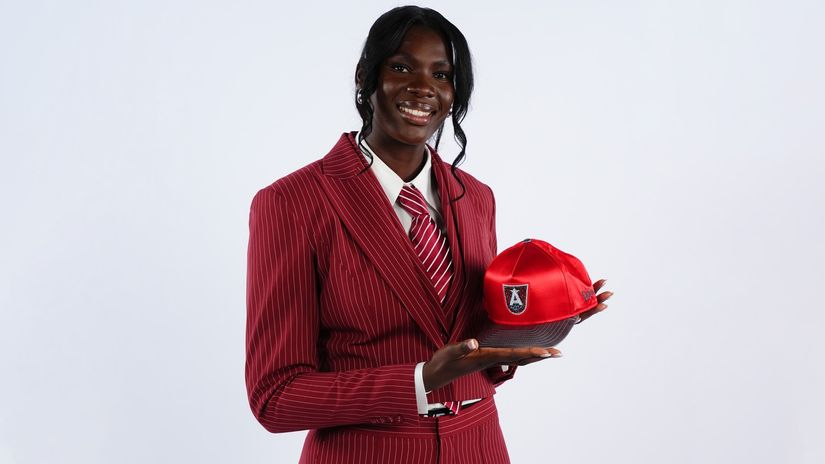
NEW YORK — The Shed at Hudson Yards, a gleaming cathedral of glass and steel on Manhattan’s western edge, has hosted fashion week galas and art world debuts. But on Monday night, April 13, 2026, it witnessed something far rarer: the rewriting of a continent’s basketball imagination.
With the 13th overall pick in the WNBA Draft, the Atlanta Dream selected Madina Okot—a 6’6” center from Mumias, Kenya. And in that single, electric moment, a nation of 55 million people saw a door kicked open that had never even had a hinge.
www.hypermax.digital
CURRENT AFFAIRS, BUSINESS & LIFESTYLE
Okot is the first Kenyan ever drafted in the first round of the WNBA, and only the second East African woman to be drafted at all. Her name now sits alongside the trailblazers: Li Yueru of China, Astou Ndour of Senegal, and the great Lauren Jackson of Australia. But Okot’s path was uniquely punishing—and her triumph is as much about resilience as it is about rebounds.
The Visa Wall That Could Have Ended Everything
Long before she stepped onto the polished stage in New York, Okot faced a barrier that has quietly derailed hundreds of African prospects: the U.S. student visa denial.
After excelling at Zetech University in Kenya, Okot secured a scholarship to play college basketball in America. But twice, the U.S. embassy turned her down. The reasons are rarely made public, but immigration attorneys who work with African athletes point to a systemic hurdle. A 2025 report by the Global Sports Migration Project found that African student-athletes are 3.2 times more likely to face initial visa denials than their European counterparts, often due to assumptions about “non-immigrant intent.”
Okot refused to accept the verdict. She reapplied, armed with additional documentation, letters of support, and an unshakable belief. The third time, the visa was granted. She arrived in the United States not as a blue-chip recruit, but as a fighter who had already won her first championship—before ever dribbling a ball on American soil.
“I had to be obsessed with details,” an emotional Okot said after the draft. “This is not just for me. It is for all of Kenya, and I hope it makes us believe we belong on any stage.”
The South Carolina Explosion: From Role Player to Double-Double Machine
Okot began her U.S. journey at Mississippi State, where she showed flashes of her potential. But it was her transfer to the South Carolina Gamecocks under Hall of Fame coach Dawn Staley that unlocked something special.
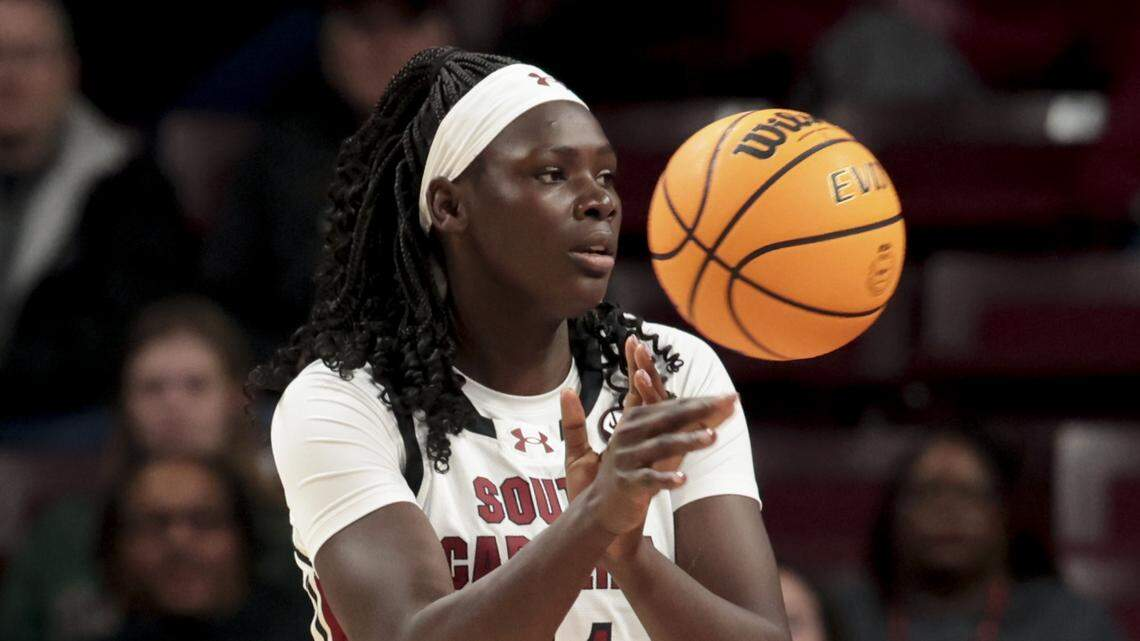
In the 2025/26 collegiate season, Okot exploded: 12.8 points, 10.6 rebounds per game, shooting an absurd 57.5% from the field and—remarkably for a traditional center—44.8% from three‑point range. She recorded 22 double‑doubles, among the highest totals in all Power Conference programs. Her ability to stretch the floor, protect the rim, and run the floor like a gazelle made her a matchup nightmare.
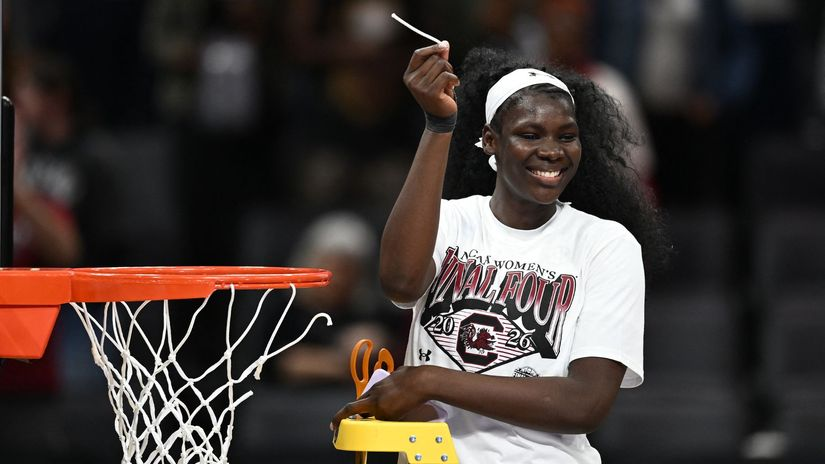
More importantly, she led South Carolina to the NCAA Division I Women’s Basketball Championship final, competing on the sport’s biggest collegiate stage. While the Gamecocks fell just short, Okot’s performance across the tournament cemented her as a first‑round lock.
According to Synergy Sports data, Okot ranked in the 96th percentile nationally in post‑up efficiency and the 91st percentile in defensive rebounding rate. Her player efficiency rating (PER) of 31.4 placed her among the top five centers in the country.
Why the Atlanta Dream Are Smiling
The Dream, coming off a competitive Eastern Conference campaign, needed size, versatility, and a locker‑room presence with a chip on her shoulder. In Okot, they get all three.
At 6’6” with a wingspan measured at 6’10”, she can defend the post and switch onto guards in pick‑and‑roll coverage—a skill increasingly vital in the modern WNBA, where teams like the Las Vegas Aces and New York Liberty deploy five‑out offenses. Her three‑point shooting (44.8% on limited attempts) suggests room for growth as a stretch five, a profile that analytics expert and former WNBA executive Sarah Pflugradt calls “the new gold standard for lottery bigs.”
Okot will report to Dream training camp on April 19, 2026, with preseason games beginning April 25. The regular season tips off May 8. She joins a frontcourt that includes All-Star forward Rhyne Howard and veteran center Tina Charles, providing mentorship and immediate playing time.
The Deeper Meaning: A Tipping Point for Kenyan Basketball
Kenya is known for its distance runners—the Kipchoges and Kipketers who have dominated marathons for generations. But basketball has long been an afterthought, played on dirt courts in rural villages with rusted rims.
That is changing. The NBA has opened an office in Nairobi. The Basketball Africa League (BAL) has expanded. And now, a 22‑year‑old from Mumias—a small sugarcane town in western Kenya—has become the face of a hoops revolution.
A 2026 study by African Sport Monitor found that televised WNBA games in Kenya saw a 340% spike in viewership during March Madness, largely driven by Okot’s run. Grassroots camps in Nairobi and Kisumu report doubled enrollment this year. She is, without exaggeration, the most influential Kenyan basketball player in history—male or female.
Final thought: When Okot suits up for the Dream this May, she will carry more than a jersey. She will carry every Kenyan kid who ever shot a ball at a crooked hoop and wondered if the world was watching. Now, the world is. And she’s just getting started.