
The improbable marriage of convenience between Kenya’s two heavyweight political rivals is fraying at the seams.
The Orange Democratic Movement (ODM) issued a blistering rebuke to its coalition partner, the United Democratic Alliance (UDA), on Thursday, accusing senior party officials of making inflammatory statements that could torpedo their fragile alliance. The stern warning followed a charged Central Committee meeting in Nairobi, signaling that the once-celebrated “broad-based government” is now navigating dangerously choppy political waters.
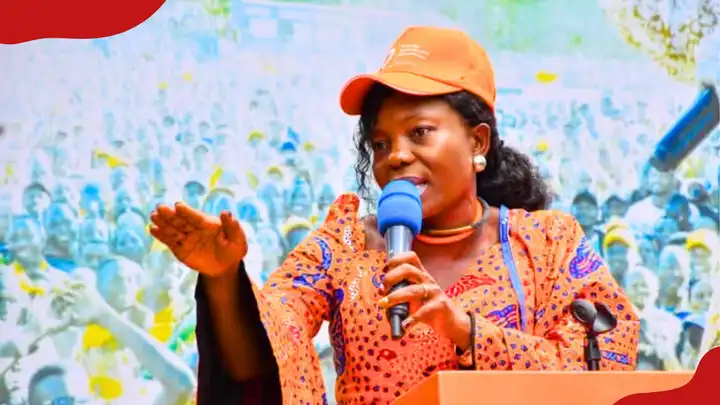
Acting Secretary General Catherine Omanyo, reading the party’s resolution, did not mince her words. She declared that the Orange party will not tolerate what it perceives as a systematic attempt by UDA to undermine its political identity and destabilize its support base.
“On our relationship with our broad-based partners, UDA, the central committee notes with concern the goings on and the unwarranted public utterances by some senior officials of the UDA party,” Omanyo said in a statement that ricocheted across the nation’s political landscape.
“The utterances are aimed at causing anxiety and disquiet among our members. As a party that believes in its principles, ideology and the foundation on which it was founded, we demand respect from the UDA party,” she added.
The Zoning Fault Line: A Clash of Visions
At the heart of this political earthquake is a single, explosive question: Who gets to contest where in 2027?
ODM is aggressively pushing for electoral zoning — a pre-election pact where coalition partners agree to stay out of each other’s designated strongholds. For the Orange party, this is not merely a tactical advantage; it is a matter of survival. A faction led by fiery Homa Bay Governor Gladys Wanga has drawn a line in the sand, declaring zoning an unshakeable precondition for any deal.
“If we are going for negotiations, we are going as equal partners, not as a weaker party,” Wanga said during a rally in Kisumu, a statement that has become a rallying cry for ODM loyalists. The argument is simple: ODM must retain its parliamentary numbers and electoral bastions in Nyanza, Western, and parts of the Coast to remain a viable force in any future government.
However, UDA has met this demand with a flat refusal. Secretary General Hassan Omar has been the most vocal opponent, framing the proposal as fundamentally anti-democratic. At a recent sensitization forum in Mombasa, he dismissed any notion of political cartels.
“Anyone who wants to vie for any seat in any UDA stronghold is welcome to vie. There is no zoning,” Omar declared. “If it is your stronghold, why are you worried about another aspirant from another party? If you believe residents are your supporters, why don’t you believe in yourself?”.
This ideological clash has paralyzed negotiations. UDA argues that the strength of a party should be tested at the ballot box, not negotiated behind closed doors. The ruling party has already mobilised over 16,000 aspirants nationwide, insisting that no corner of the country is off-limits.
Coalition Talks Suspended: A Seven-Hour Showdown
The public spat is merely the tip of the iceberg. Behind closed doors, the relationship is collapsing.
According to sources who spoke to the Daily Nation, ODM’s Central Management Committee—chaired by party leader Oburu Oginga—held a marathon, seven-hour crisis meeting that was described as “tense” and “highly charged”. Accusations flew as top officials alleged a coordinated scheme by elements within UDA to lure ODM lawmakers and entice them to defect.
The outcome was dramatic. The committee voted to immediately suspend all pre-2027 coalition talks with UDA. Furthermore, ODM members have been instructed to stop campaigning for President William Ruto’s re-election bid until their grievances are addressed.
ODM leaders, including Oburu Oginga, Simba Arati, and Gladys Wanga, have been mandated to seek an urgent audience with President Ruto to resolve the standoff. “These conditions have to be met before we can consider any talks on coalitions. The President has to tame his people,” a top official told the Nation.
The party is now pivoting to a solo strategy, planning a series of massive youth conventions across 25 counties to “rejuvenate, revamp, and re-energise” the party machinery.
Beyond Politics: The Cost of Living Crunch
Amid the political firestorm, ODM took a moment to address the real-world pain gripping the electorate. Omanyo expressed deep concern over the relentless surge in fuel prices, which continues to hammer households and transport costs across Kenya.
“Kenyans are concerned about the increase in fuel prices. We know this is a global problem. While noting the government’s efforts to mitigate the situation, we continue to push it to do more to cushion Kenyans from the effects of this crisis,” the party stated.
THE MARKET PLACE | AutoBuzz Motors
Fresh Imports | Clean Rides, Unbeatable Price!
The acknowledgment serves as a reminder that while politicians battle over turf and titles, millions of Kenyans are struggling to make ends meet, and their patience with political infighting is wearing thin.
The Bottom Line
The suspension of talks does not necessarily spell the end of the UDA-ODM romance, but it has undoubtedly thrown it into intensive care. As the clock ticks toward 2027, President Ruto faces a delicate balancing act: appease his restive UDA base, who view zoning as political cowardice, while convincing a proud ODM that they are respected partners, not vassals. For now, the “broad-based government” is a house divided.
THE POLITICIAN
Politics | Policy | Governance