
As geopolitical tremors from the Middle East ripple across global markets, President William Ruto has moved to calm a nation bracing for rising fuel and commodity prices, unveiling a suite of interventions aimed at insulating Kenyan households from external shocks.
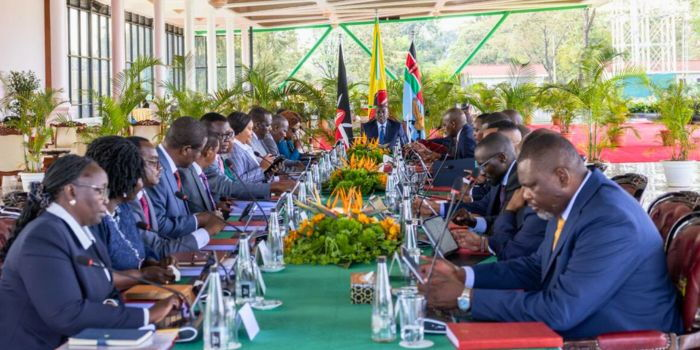
In a high-level briefing held on March 30, the President convened key economic and sectoral players—including officials from the Ministry of Energy, Agriculture, and Trade, alongside the National Treasury and the Central Bank of Kenya—to assess the unfolding crisis and chart a path forward.
The meeting zeroed in on the far-reaching consequences of the ongoing Middle East conflict, particularly its potential to disrupt fuel supply chains, strain food systems, and unsettle Kenya’s export markets. Yet, even as uncertainty looms, the government is projecting cautious confidence.
HYPERMAX MOTORS
Affordable Rides, Unbeatable Price
At the centre of the response is the Government-to-Government fuel procurement framework, which the President says is already acting as a critical buffer against volatile global oil prices. By securing supply and stabilising costs, the arrangement has, for now, spared consumers from the sharp spikes witnessed elsewhere.
“This strategic intervention has mitigated price increases and ensured security of supply,” Ruto noted, describing the deal as both pragmatic and forward-looking in the face of unpredictable global dynamics.
Still, the administration is preparing for a prolonged crisis. The Ministry of Energy, working in tandem with the National Treasury, has been tasked with designing additional safeguards should international prices continue their upward trajectory.
Beyond fuel, attention has also turned to food security—a sector often first to feel the pressure of global instability. Here, the President struck a reassuring tone, confirming that fertiliser stocks remain sufficient to sustain the current planting season through September, easing fears of disrupted agricultural output.
Encouraging signals are also emerging from key export sectors. Kenya’s tea industry, a cornerstone of foreign exchange earnings, has posted a six per cent growth, buoyed by diversification into new markets and strengthened trade ties. Meanwhile, activity at the Port of Mombasa and the Port of Lamu is on the rise, with the latter recording a notable surge in cargo throughput, including high-value vehicle transhipments destined for Gulf markets.
Yet, not all sectors are weathering the storm equally. Meat exports have taken a hit, hampered by logistical bottlenecks and freight disruptions linked to the conflict. In response, the government is exploring alternative export channels to sustain the industry and protect livelihoods.
Smart People Read Great Books
We have great e-books for smart brains. Buy with Mpesa/Airtelmoney or Card and Get a copy in your email INSTANTLY!
Even as the crisis enters its fourth week, Ruto’s message is one of vigilance and resolve. The government, he said, will continue to monitor developments closely and act decisively to safeguard economic stability and the welfare of its citizens.
In a world increasingly shaped by distant conflicts, Kenya’s response underscores a delicate balancing act—shielding its economy while staying agile in the face of forces beyond its borders.