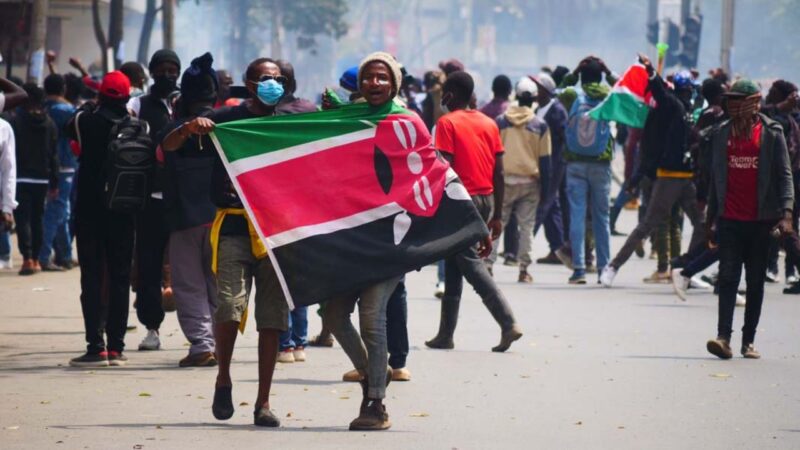
Former Deputy President Rigathi Gachagua has ignited a fresh political storm, accusing the government of weaponising identity card issuance—and warning that Kenya’s restless youth could soon take matters into their own hands.
www.hypermax.digital
CURRENT AFFAIRS, BUSINESS & SPORTS MAGAZINE
Speaking during a church service in Gatundu North, Gachagua alleged a calculated effort to frustrate young applicants seeking national identification documents, particularly in regions perceived to be politically unsympathetic to President William Ruto’s administration.
With characteristic bluntness, the former deputy president framed the issue not merely as administrative failure, but as a democratic fault line.
“We have received reports that IDs are not being issued to areas which do not favour William Ruto,” Gachagua claimed, before escalating his rhetoric with a direct warning to the state machinery.
He announced that opposition leaders would convene on Monday, April 6, to chart a response—one that could include nationwide protests. His most striking threat: mobilising Gen Z to occupy government offices if the alleged discrimination persists.
“If you don't stop discrimination and issue IDs to everybody, we shall request Gen Zs to occupy your offices across the country,” he said, invoking a generation increasingly seen as politically disruptive and digitally organised.
Akili Book Shop
Smart People Read Great Books
We have great e-books for smart brains. Buy with Mpesa/Airtelmoney or Card and Get a copy in your email INSTANTLY!
A System Under Strain—or a Narrative in Motion?
Gachagua’s claims emerge against a backdrop of troubling data from Huduma Kenya, which paints a different, though equally concerning, picture.
According to the agency, tens of thousands of critical documents remain uncollected across the country:
- 152,398 national IDs
- 85,550 smart driving licences
- 28,550 birth certificates
The figures suggest a paradox: while some decry inaccessibility, a significant backlog of ready documents lies idle in government offices—raising questions about public awareness, bureaucratic communication, and systemic efficiency.
AutoBuzz Motors
Kenya used vehicles on sale | Clean Rides, Unbeatable Price!
The Electoral Undercurrent
Beyond the immediate controversy, the stakes are unmistakably political.
Without a national ID, Kenyans cannot register as voters—a reality that places the Independent Electoral and Boundaries Commission (IEBC) in a precarious position. The commission is currently racing to meet an ambitious target of 2.5 million new voters in its Continuous Voter Registration exercise launched on March 30.
Complicating matters further, recent IEBC statements regarding voters registered before 2012 triggered widespread confusion. Initial suggestions that some citizens might need to re-register sparked public anxiety over the validity of older records.
The commission later clarified that only individuals who missed the 2012 biometric registration would need to register afresh—an attempt to restore confidence in the integrity of the voter roll.
Gachagua, however, remains unconvinced.
“Once we understand what is going on within the IEBC, we will issue a statement,” he said, signaling that the opposition is preparing for a broader confrontation that could extend well beyond ID issuance.
AutoBuzz Motors
Fresh Imports | Clean Rides, Unbeatable Price!
At its core, this unfolding dispute is about more than identity cards. It touches on access, representation, and the mechanics of democracy itself.
Gachagua’s strategy—leaning into Gen Z mobilisation—reflects a shifting political terrain where youthful dissent carries real disruptive potential. Whether his claims hold under scrutiny or not, the narrative has already sharpened tensions around governance, fairness, and electoral credibility.
As Kenya edges closer to critical political milestones, one thing is clear: the battle over IDs may well become a proxy war for something far larger—the fight over who gets counted, and who gets heard.